Trusted Auto Clinic in Soshanguve

Your Car Deserves
Expert Care

Professional auto repair, servicing, and maintenance in Soshanguve, Gauteng. Quality workmanship with a modern approach — because your vehicle matters.

10+
Years Experience
1000+
Cars Serviced
98%
Happy Clients
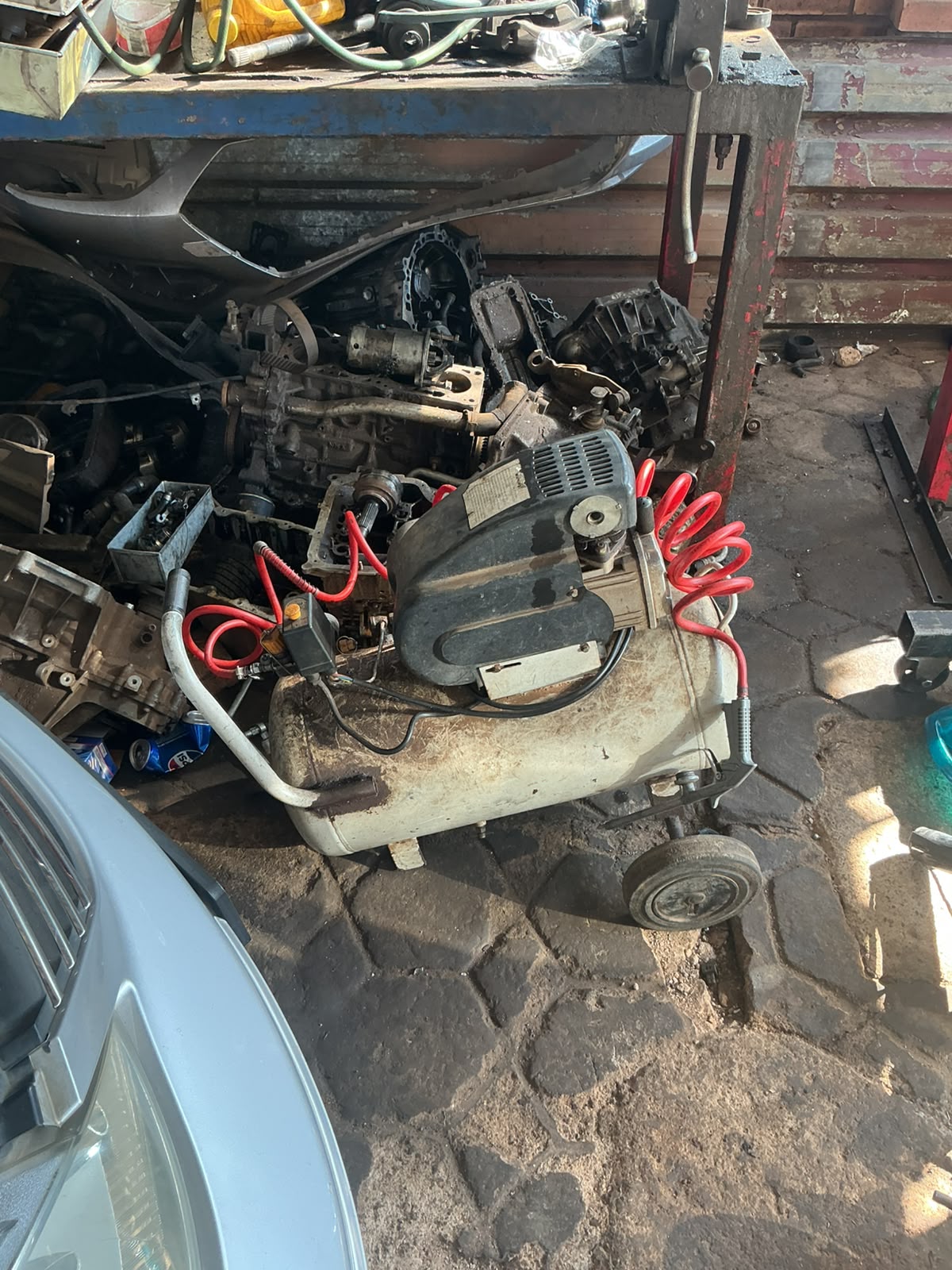
Professional car mechanic working on engine
Expert Mechanics
Quality Guaranteed

Our Services

Comprehensive automotive care — from routine services to major repairs.

Services

Brakes

Clutches

Starters

Suspension

Shocks

Cambelts

Wheel Bearings

Alternators

Turbos

Injectors

Steering

Batteries

Body Work

Performance

Fuel Consumption

Gearbox

Warning Lights

Diagnostics

Exhausts

Service Pricing

Transparent pricing for our most popular services.

Minor Service

From R550

Oil change, oil filter, top-up fluids, safety check, tyre pressure check.

  • Engine oil & filter replacement
  • All fluid top-ups
  • Brake & tyre inspection
  • 15-point safety check

Intermediate Service

From R950

Includes minor service plus air filter, spark plugs, and full brake inspection.

  • All minor service items
  • Air filter replacement
  • Spark plug inspection/replacement
  • Full brake system check

Major Service

From R1,850

Comprehensive service including cambelt inspection, coolant flush, and full vehicle check.

  • All intermediate service items
  • Cambelt / timing belt inspection
  • Coolant flush & replace
  • Full vehicle health report

Brake Replacement

From R750

Pad replacement, disc skimming/resurface, brake fluid check & top-up.

Clutch Replacement

From R2,500

Full clutch kit replacement, pressure plate, release bearing, and gearbox oil.

Full Engine Diagnostics

From R350

Computer diagnostics scan, fault code reading & clearing, full system check.

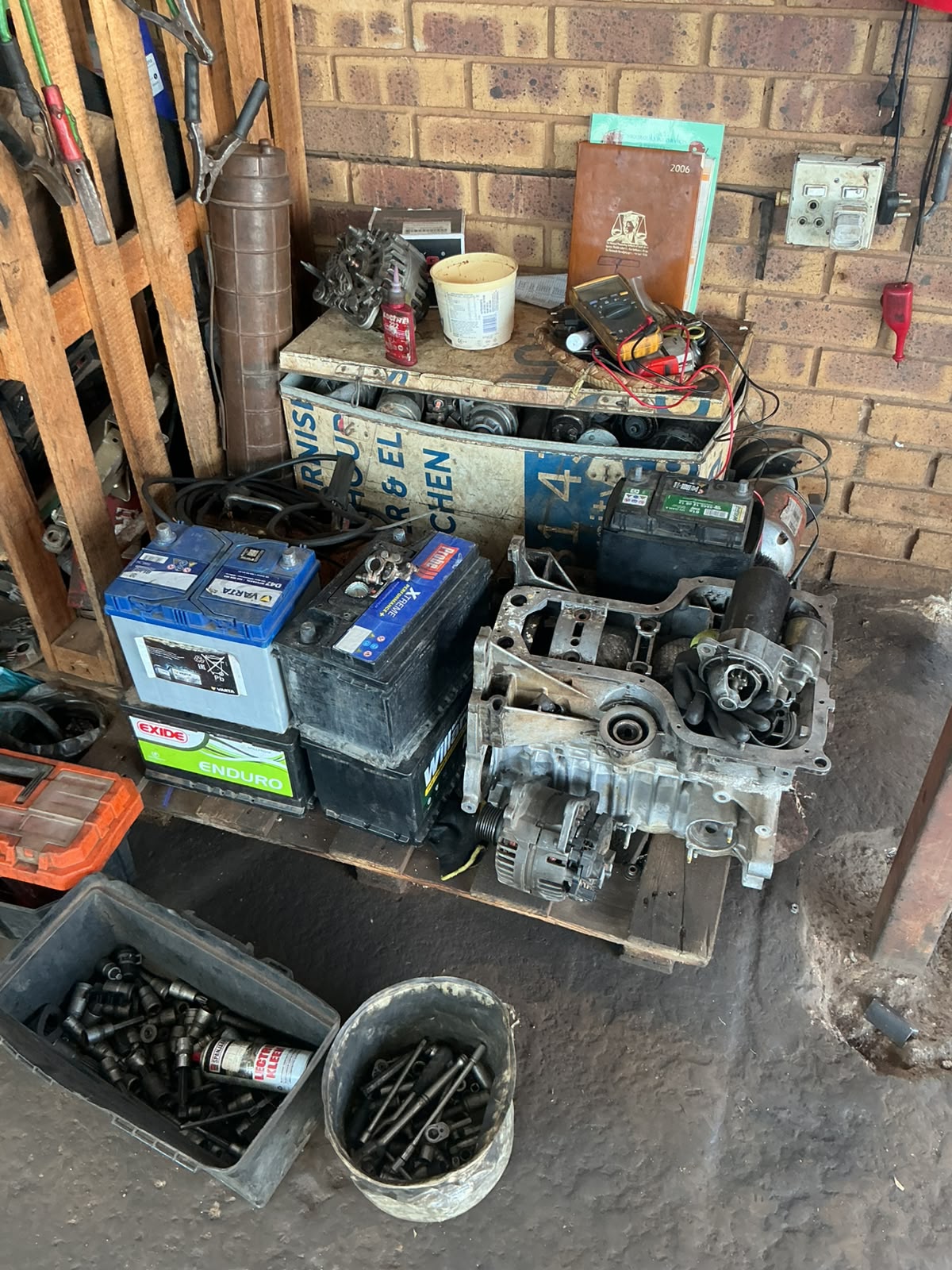
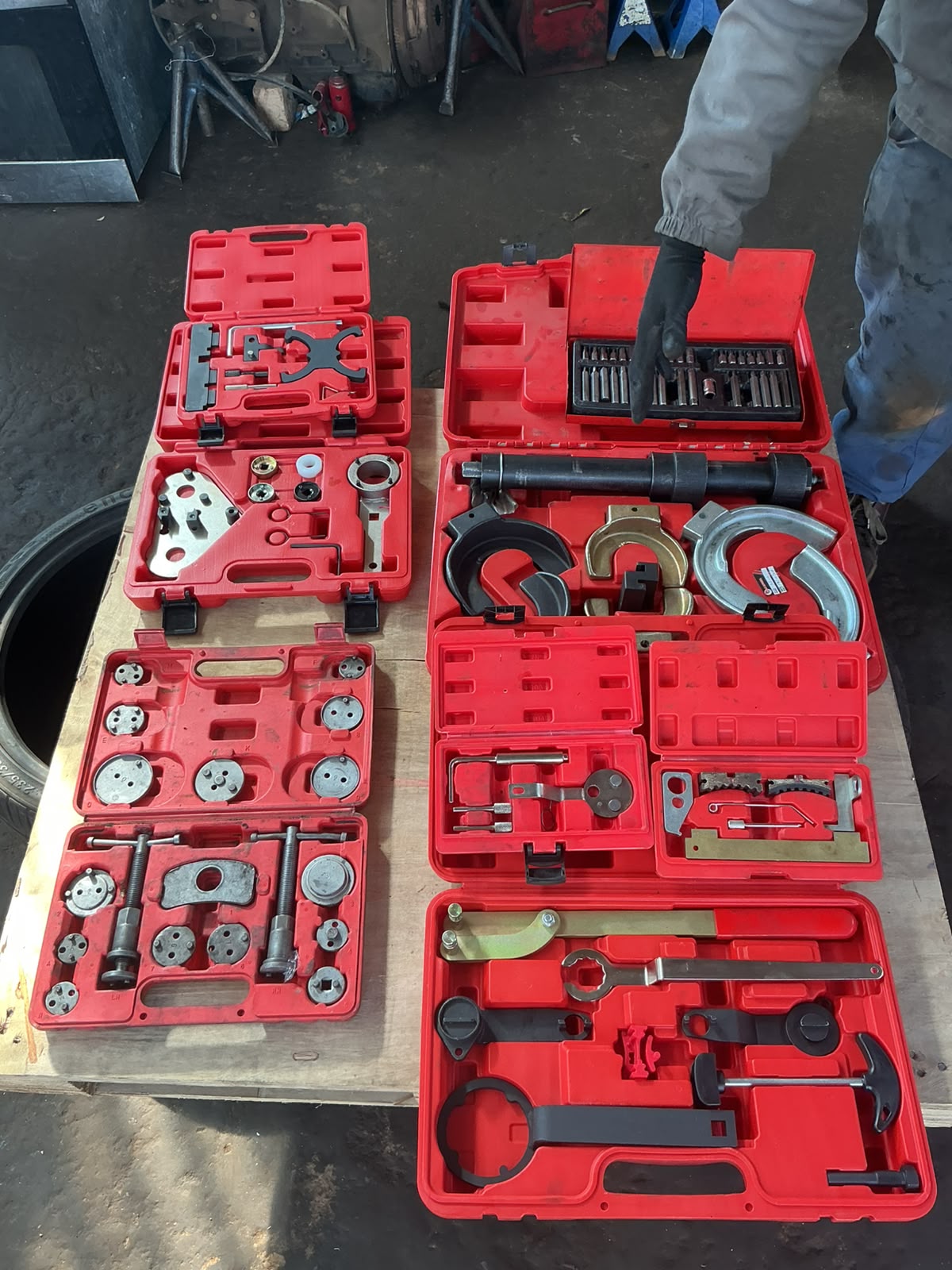
Modern car workshop with professional tools

Quality Service You Can Trust

Certified Mechanics

Our team has years of experience servicing all makes and models.

Modern Equipment

We use the latest diagnostic tools and equipment for accurate repairs.

Fair Pricing

Transparent quotes with no hidden fees. Quality work at honest prices.

Customer First

We treat every customer like family and every car like our own.

Guaranteed Work

All repairs come with a warranty for your peace of mind.

What Our Customers Say

Don't just take our word for it. Here's what our clients have to say.

"Excellent service! Took my car for a major service and it drives like new. Abe and his team are professionals. Highly recommend."

TM
Thabo M.
Toyota Hilux

"Fair pricing and honest work. My brakes were done quickly and the price was exactly what I was quoted. No surprises. Will definitely be back."

PN
Precious N.
VW Polo

"Best motor clinic in Soshanguve! They diagnosed my engine issue quickly and fixed it same day. Knowledgeable team with modern equipment."

KD
Katlego D.
BMW 3 Series

Latest News & Advice

Stay informed with our latest articles on vehicle maintenance.

Car maintenance tips
Maintenance Tips
May 15, 2026

5 Signs Your Car Needs a Service

Don't ignore these warning signs. Learn when your vehicle needs professional attention.

Read More
Engine check
Car Knowledge
Apr 28, 2026

Understanding Your Engine Warning Lights

What those dashboard lights mean and when to panic (or not).

Read More
Brake inspection
Safety
Apr 10, 2026

When Should You Replace Your Brakes?

A complete guide to brake maintenance and knowing when it's time for new pads.

Read More

Abe and Sol's Motor Clinic

Abe and Sol's Motor Clinic was established with a simple mission: provide honest, high-quality automotive care to the Soshanguve community and beyond. With years of combined experience in the motor industry, we bring professional expertise to every vehicle that enters our workshop.

From routine services to complex repairs, our team treats every job with meticulous attention to detail. We believe in transparency, fair pricing, and building lasting relationships with our customers.

Located at 331 Monadi Street, Soshanguve-WW, we are your local automotive experts committed to keeping your vehicle safe, reliable, and performing at its best.

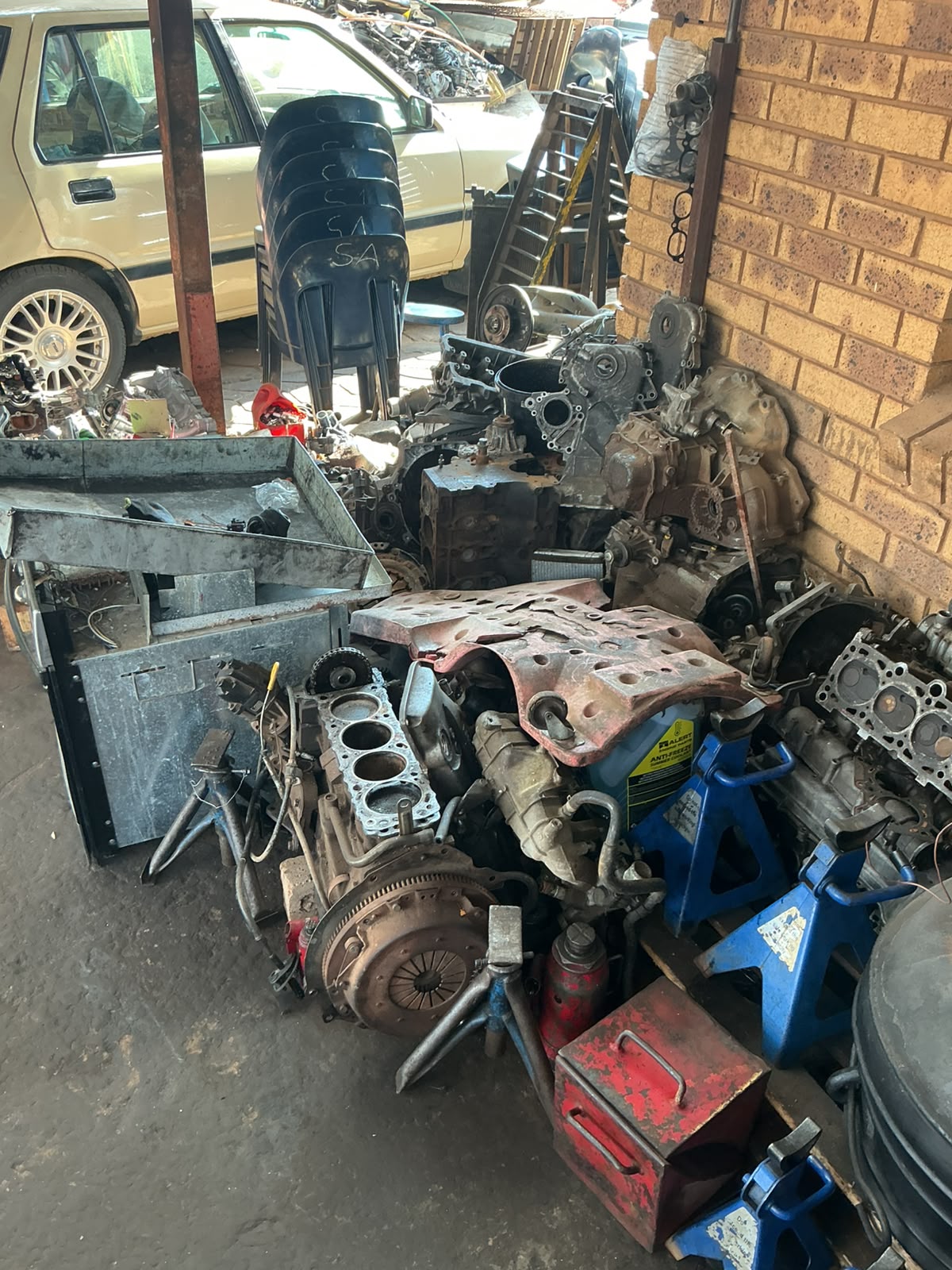
Mechanic working under car in workshop

Join Our Loyalty Program

Every 5th service is on us! Earn points with every visit and redeem for discounts.

Ask us about our loyalty card

Book Your Service Today

Ready to get your car looked after? Give us a call or send us a message.

Address

331 Monadi Street, Soshanguve-WW
Soshanguve, Gauteng 0152

Business Hours

Mon – Fri: 8:00 AM – 5:00 PM
Sat: 8:00 AM – 1:00 PM
Sun: Closed

Never Miss a Service Again

Sign up for service reminders and we'll notify you when your car is due for its next service.

Maintenance Tips

5 Signs Your Car Needs a Service — Don't Ignore These

May 15, 2026 5 min read Abe & Sol's Team
Car maintenance

Many drivers in Soshanguve and across Gauteng put off servicing their vehicle until something goes visibly wrong — but by that point, the damage is often already done, and the repair bill is far larger than the service would have been. Knowing your car's warning signs could save you thousands of rands and keep you safe on the road.

Here are five warning signs you should never ignore, straight from our team at Abe & Sol's Motor Clinic.

1. Dashboard Warning Lights

Your car's onboard computer monitors dozens of systems continuously. If any of these lights come on — the engine warning light, oil pressure light, battery light, or temperature warning — don't wait to see if it goes away on its own.

Warning lights exist to give you time to act before a small problem becomes a major failure. A diagnostic scan from our team takes less than 30 minutes and tells you exactly which system triggered the alert and why.

💡 Tip: A flashing warning light is always more urgent than a steady one. If your engine light is flashing, reduce speed and bring the vehicle in immediately.

2. Unusual Noises

Modern cars are designed to run quietly. Any new noise — knocking, grinding, squealing, rattling, or hissing — is your car communicating that something has changed. Don't turn the radio up louder and hope for the best.

  • Brake squealing — The built-in wear indicators are touching the rotor. Pads need replacing.
  • Grinding when braking — Metal-on-metal contact. This is urgent — your stopping distance is compromised.
  • Engine knocking — Could indicate low oil, incorrect fuel, or timing issues.
  • Rattling under the car — Often a loose exhaust heat shield or suspension component.
  • Hissing under the bonnet — A vacuum or coolant leak. Check the temperature gauge immediately.

3. Decreased Performance or Fuel Efficiency

If your car feels sluggish, struggles to reach highway speed, hesitates when accelerating, or you're filling up more often than usual — these are classic signs your engine isn't running at its best.

Common culprits include dirty air filters, worn spark plugs, clogged fuel injectors, or a failing oxygen sensor. These are all relatively inexpensive fixes when caught early, but left untreated they stress other components and reduce engine lifespan.

4. Vibrations or Pulling While Driving

Your car should track straight without you correcting the steering wheel. If it pulls to one side, your wheel alignment may be off — or worse, you could have uneven brake wear or a binding calliper.

Steering wheel vibration at highway speed usually means your wheels need balancing. Vibration that gets worse when braking points to warped brake discs. Both are safety issues that should be addressed promptly.

5. Visible Leaks or Smoke

Any puddle under your parked car deserves attention. The colour tells you a lot:

  • Dark brown/black — Engine oil leak
  • Green or orange — Coolant (antifreeze) leak
  • Clear/yellowish — Brake fluid or power steering fluid
  • Reddish — Transmission fluid

White smoke from the exhaust on a cold morning is normal condensation. But persistent white, blue, or black smoke indicates burning coolant, oil, or an overly rich fuel mixture respectively — all of which require professional attention.

How Often Should You Service Your Car?

As a general rule, a minor service every 10,000 km or every 6 months (whichever comes first) keeps most vehicles in good condition. An intermediate service is recommended at 20,000 km and a major service at 40,000 km or as per your manufacturer's schedule.

If you're unsure when your car was last serviced, bring it in to us and we'll do a complimentary inspection to give you a clear picture of its current condition.

Book a Service on WhatsApp
Car Knowledge

Understanding Your Engine Warning Lights — What Each One Actually Means

Apr 28, 2026 6 min read Abe & Sol's Team
Engine diagnostics

Your dashboard is one of the most useful communication tools your car has — but most drivers have no idea what the majority of those symbols mean. Knowing which lights demand immediate action and which can wait a few days could be the difference between a minor repair and a blown engine.

Here's your complete guide to the most common warning lights and what they mean for South African drivers.

🔴 Red Lights — Stop Driving Immediately

Red lights are your car's emergency signals. When one appears, take it seriously.

Oil Pressure Warning (Oil Can Symbol)

This means your engine oil pressure has dropped critically low. Your engine's moving parts are no longer being properly lubricated — every second you continue driving risks serious internal damage. Pull over safely, turn off the engine, and call us. Do not restart until the cause is diagnosed.

⚠️ This is the most dangerous light to ignore. An engine seizure from oil starvation can cost R30,000–R80,000 to rebuild — all from ignoring a R350 oil change.

Engine Temperature Warning (Thermometer Symbol)

Your engine is overheating. This can be caused by a coolant leak, a failed thermostat, a blocked radiator, or a broken water pump. Turn off the aircon immediately (it adds engine load), pull over safely, and let the engine cool for at least 20 minutes. Never open the radiator cap while the engine is hot.

Battery / Charging System Warning

Your alternator has stopped charging the battery. Your car is running purely on battery reserve — which typically gives you 20–40 minutes of driving before the engine cuts out. Head directly to a workshop. Do not switch off the engine once stopped, as it may not restart.

Brake System Warning

If this appears while driving (not just on startup), you may have a brake fluid leak or a serious brake system fault. Your stopping ability is compromised. Drive slowly and carefully to the nearest workshop.

🟡 Amber Lights — Get It Checked Within a Week

Check Engine Light (Engine Symbol)

This is the most misunderstood light on any dashboard. It covers hundreds of different fault codes — from something as minor as a loose fuel cap to something as serious as a failing catalytic converter or oxygen sensor. The light itself doesn't tell you how serious the problem is; only a diagnostic scan can do that.

A steady check engine light: get it scanned within a week. A flashing check engine light: treat it like a red light — reduce speed and get it checked immediately, as it often indicates engine misfiring that can damage the catalytic converter.

ABS Warning Light

Your anti-lock braking system has a fault. Your normal brakes still work, but the ABS — which prevents wheel lockup during emergency stops — may not activate. Avoid high-speed driving or driving in wet conditions until this is repaired.

Traction Control / Stability Warning

Similar to ABS, your traction control system isn't functioning. Safe to drive with care, but get it checked, especially before winter rains in Gauteng.

Tyre Pressure (TPMS)

One or more of your tyres has dropped below the recommended pressure. Check and inflate all four tyres. This light can also appear if a tyre has a slow puncture — inspect carefully.

How We Help

At Abe & Sol's Motor Clinic, we have professional OBD-II diagnostic equipment that reads your car's full fault code log — not just the current active light. Many faults leave a stored code even after the light clears, giving us a complete picture of your vehicle's health.

A full diagnostic scan takes 20–30 minutes. We explain every code in plain language, give you a quote for any repairs needed, and never replace parts you don't actually need.

Book a Diagnostic Scan
Safety

When Should You Replace Your Brakes? A Complete Guide for SA Drivers

Apr 10, 2026 7 min read Abe & Sol's Team
Brake inspection

Your brakes are the single most important safety system on your vehicle — more important than airbags, ABS, or traction control, because they're the primary tool that stops you from hitting something. And yet brake maintenance is one of the most commonly deferred repairs we see at Abe & Sol's.

This guide covers everything you need to know about brake wear, replacement timing, and what the repair actually involves — so you can make an informed decision and drive safely.

How Brake Pads Work

Disc brakes — which most modern South African cars use on at least the front axle — work by squeezing friction material (the brake pad) against a spinning metal disc (the rotor). This friction converts your vehicle's kinetic energy into heat, slowing the car down.

Brake pads are a wear item. They're designed to be replaced — and they contain a built-in metal indicator that creates a squealing sound when the pad wears down to the minimum safe thickness. This is your first warning.

How Long Do Brakes Last?

There's no single answer — it depends on several factors unique to your situation:

  • Driving style — Aggressive braking wears pads 2–3x faster than smooth driving
  • Traffic conditions — Stop-start city driving (like the R80 or N1 through Pretoria) is far harder on brakes than highway driving
  • Vehicle weight — Heavier vehicles like SUVs and bakkies generate more heat during braking
  • Pad material — Organic pads are quieter but wear faster; semi-metallic pads last longer and perform better in heat

As a rough guide: front pads typically last 30,000–50,000 km; rear pads often last 60,000–80,000 km because the front brakes do most of the work.

Warning Signs Your Brakes Need Attention

Squealing or Screeching Noise

This is the wear indicator doing its job. You have some time — typically several thousand kilometres — but book an inspection within the next week or two. Don't wait for the next sound.

Grinding Noise When Braking

The pad material is gone. Metal is contacting metal. This is urgent — your stopping distance is compromised, your rotor is being damaged with every braking event, and you are legally and practically at risk. Book immediately.

⚠️ A grinding brake that could have been fixed with a R750 pad replacement — left for two more weeks — often turns into a R2,000–R3,500 repair because the rotor has been scored beyond resurfacing and needs full replacement.

Vibration or Pulsing When Braking

If you feel the brake pedal pulsing or the steering wheel vibrating when you brake, your rotors are most likely warped. This happens when brakes overheat and cool unevenly — common after long downhill stretches or repeated hard stops. Warped rotors can often be resurfaced (skimmed) for R350–R600 per axle, which is far cheaper than replacement.

Car Pulling to One Side When Braking

This points to uneven brake wear between the left and right side, or a stuck brake calliper. A stuck calliper not only causes uneven stopping — it drags on the rotor constantly, generating excessive heat and wearing out the pad extremely rapidly. Left untreated, it can cause the brakes to overheat and fail.

Soft or Spongy Brake Pedal

If your brake pedal goes further towards the floor than it used to before the brakes engage, or feels mushy, there's likely air in the brake lines or a brake fluid leak. This is a serious safety concern — brake fluid is what transmits the pressure from your foot to the callipers. Have the brake system inspected immediately.

Burning Smell After Driving

A sharp chemical smell after repeated hard braking (coming off a long hill, for example) is usually overheated brake pads — find a safe place to stop and let them cool. But if you smell burning during normal driving, a calliper is likely sticking and dragging on the disc constantly.

What We Check at Abe & Sol's

When you bring your car in for a brake inspection, our technicians check the following on every wheel:

  • Brake pad thickness (measured in millimetres — less than 3mm means replacement is due)
  • Rotor thickness and surface condition (scored, grooved, or below minimum spec)
  • Calliper operation (slides freely, pistons retract properly)
  • Brake fluid level and condition (fluid absorbs moisture over time and should be replaced every 2 years)
  • Brake hose condition (rubber perishes and can crack or collapse internally)
  • Handbrake cable adjustment

We show you the worn components before any work begins. You'll see exactly what needs replacing and why, and receive a written quote before we touch anything.

The Cost of Waiting

Brake pad replacement for a typical sedan: R750–R1,200 per axle, labour included. Brake pads plus rotor replacement because the rotor was allowed to get scored: R2,000–R3,500 per axle. The maths is simple — and so is the safety case.

Book a Brake Inspection
Chat with us!

Book a Service

Fill in your details and we'll get back to you within 24 hours.